Oral vs Topical Minoxidil for Women: Which Is Right for You?
Medically reviewed by Dr Margo Gkini, Consultant Dermatologist, MD, MSc, PhD, FRCP – September 2026
Minoxidil is one of the most established treatments for female pattern hair loss. But women considering treatment increasingly have another question: is topical or oral minoxidil better?
Both contain the same active ingredient and aim to support healthier hair growth, but they're delivered very differently:
Topical minoxidil is applied directly to the scalp.
Oral minoxidil is taken as a low-dose tablet.
Topical minoxidil has a long-established evidence base for female pattern hair loss. Low-dose oral minoxidil is increasingly used by dermatologists, with growing evidence supporting its effectiveness, but its use for hair loss is off-label in the UK.
Neither option is universally ‘better’. A small number of studies have compared the two forms, with varying results. The right choice depends on an individual's medical history, preferences, tolerance of side effects and ability to use treatment consistently.
For a broader overview of the treatment options available, read Hair Loss Treatments for Women: What Actually Works?
How Does Minoxidil Work?
Minoxidil helps influence the hair growth cycle and stimulate affected follicles, helping hairs grow thicker and remain in the growth phase for longer.
Over time, this can help:
Reduce the progression of thinning
Increase hair diameter
Improve hair density
Support visible regrowth
It doesn't permanently cure female pattern hair loss. The benefits generally need to be maintained through continued treatment.
For more about how minoxidil works, read What Is Minoxidil? A Simple Explanation.
What Is Topical Minoxidil?
Topical minoxidil is applied directly to areas of thinning on the scalp rather than the hair.
It has been studied extensively in women. In a randomised controlled trial involving 381 women with female pattern hair loss, both 2% and 5% topical minoxidil improved hair growth compared with placebo after 48 weeks.
The British Association of Dermatologists recommends topical minoxidil as a treatment that can slow progression and partially restore hair in some women with female pattern hair loss.
Advantages of topical minoxidil
Extensive clinical evidence
Applied directly to the scalp
Lower systemic absorption than oral treatment
Suitable for many women
Can be incorporated into combination topical formulations
Potential disadvantages
Some women experience:
Scalp dryness and flaking
Itching
Redness or irritation
Unwanted facial hair if the product spreads beyond the scalp
There is also the practical consideration of applying treatment regularly. Treatment can only work effectively if it is used consistently.
What Is Oral Minoxidil?
Oral minoxidil was originally developed as a medication for high blood pressure. Increased hair growth was observed as a side effect, eventually leading to the development of topical minoxidil.
More recently, dermatologists have increasingly used low-dose oral minoxidil (LDOM) to treat different forms of hair loss.
Importantly, oral minoxidil is not licensed specifically as a hair-loss treatment in the UK. When it is prescribed for this purpose, it is being used off-label.
‘Off-label’ doesn’t mean a medication is unsafe or unproven. It means it’s being prescribed for a condition, dose or patient group not covered by its licence. This is common in many areas of medicine, but it means appropriate medical assessment is particularly important.
Is Oral Minoxidil More Effective Than Topical Minoxidil?
Not necessarily.
This is an important distinction because oral treatment can sometimes sound like the ‘stronger’ option.
Randomised studies directly comparing the two suggest that both can be effective.
One trial involving 72 women compared 0.25 mg oral minoxidil with 2% topical minoxidil over nine months. Hair density and diameter improved significantly in both groups, with no statistically significant difference between them.
Another randomised clinical trial compared 1 mg oral minoxidil with 5% topical minoxidil in women with female pattern hair loss.
The evidence therefore doesn't support assuming that taking minoxidil orally will automatically produce better results.
Instead, it’s about finding the option that offers the right balance of effectiveness, safety and convenience for you.
Why Might a Woman Choose Oral Minoxidil?
For some women, the main advantage is convenience.
A tablet may be preferable if someone:
Finds daily scalp application difficult
Experiences irritation from topical treatment
Dislikes residue or product in their hair
Struggles to apply topical treatment consistently
Has been advised by a clinician that oral treatment is more appropriate
A real-world study of 148 women receiving low-dose oral minoxidil found clinical improvement in many patients. However, most were also receiving other treatments, meaning the results can’t tell us how effective minoxidil was on its own.
What Are the Side Effects?
The side-effect profiles are one of the most important differences.
Topical minoxidil
Because treatment is applied to the scalp, side effects tend to occur locally and can include:
Itching
Dryness and flaking
Redness
Scalp irritation
Unwanted facial hair growth
The British Association of Dermatologists also notes that topical minoxidil can cause an initial increase in hair shedding during the first few weeks of treatment.
Oral minoxidil
Because oral minoxidil circulates throughout the body, potential side effects can affect other areas of the body.
These can include:
Increased facial or body hair (hypertrichosis)
Fluid retention or swelling
Light-headedness
Headaches
Increased heart rate or palpitations
These potential cardiovascular effects are one reason oral minoxidil should only be prescribed following an appropriate medical assessment.
What About Unwanted Facial Hair?
This can be particularly important to women when deciding between the two options.
Both forms of minoxidil can potentially cause unwanted facial hair growth, but for different reasons.
With topical minoxidil, it may occur if the medication repeatedly comes into contact with the forehead or face. Careful application can help minimise this.
With oral minoxidil, increased hair growth can occur elsewhere because the medication circulates systemically. Hypertrichosis is one of the most frequently reported side effects of low-dose oral minoxidil.
This doesn't mean it will happen to every woman taking oral minoxidil, but it’s something to consider when deciding which treatment is right for you.
Who Shouldn't Use Minoxidil?
Suitability needs to be assessed individually.
Minoxidil should generally be avoided during pregnancy and breastfeeding, and women planning a pregnancy should discuss treatment options with their healthcare professional.
Oral minoxidil requires additional consideration because it works throughout the body. Medical history, cardiovascular health, blood pressure and other medications may all be relevant when deciding whether it is appropriate.
This is one reason women shouldn't choose between oral and topical treatment based purely on convenience or online recommendations.
How Long Does Minoxidil Take to Work?
Whichever formulation is chosen, patience is important.
Hair grows slowly, so treatment needs time to influence the follicle and hair growth cycle. Topical minoxidil should generally be used for at least six months before its benefit is assessed, according to the British Association of Dermatologists.
Some women may notice reduced shedding before they see obvious improvements in density.
For a fuller explanation of what happens month by month, read How Long Does Hair Regrowth Actually Take?
So, Which Is Right for You?
There isn't one answer for every woman.
Topical minoxidil may be preferable when:
A locally applied treatment is preferred
Minimising systemic exposure is important
Daily application is manageable
Treatment is well tolerated on the scalp
Oral minoxidil may be considered when:
Topical application is difficult to maintain
Topical treatment causes significant irritation
A tablet is likely to improve treatment adherence
A clinician considers oral treatment appropriate after reviewing medical history
Crucially, oral minoxidil shouldn't automatically be viewed as an upgrade from topical treatment.
Both approaches can work. The right treatment is the one that’s medically appropriate, well tolerated and realistic to use consistently.
How Hair + Me Can Help
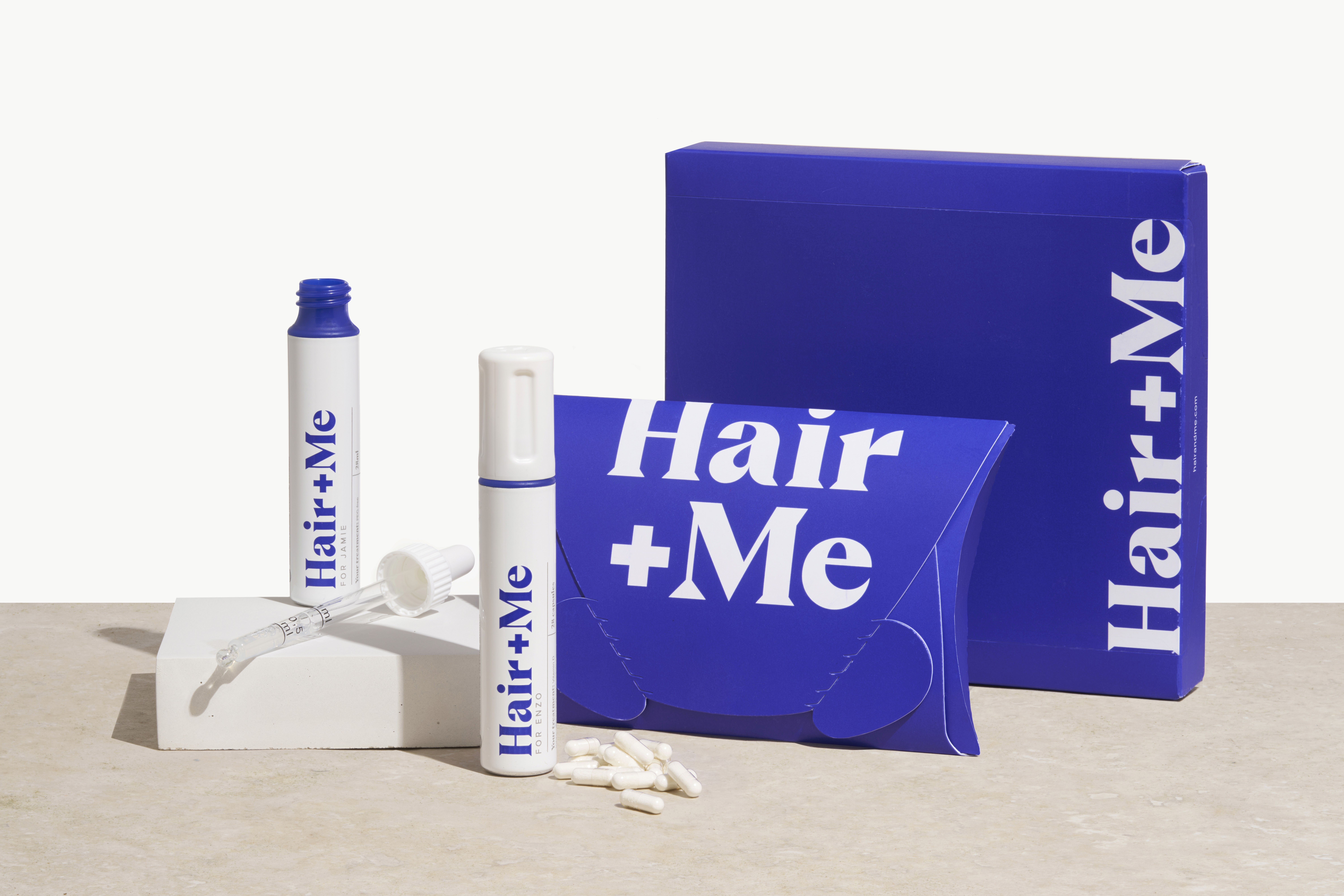
Hair loss isn't one-size-fits-all – and neither is treatment. Every Hair + Me treatment begins with a thorough online consultation that's reviewed by a qualified UK-licensed Pharmacist Prescriber. They'll assess your hair loss pattern, medical history, lifestyle and treatment goals to determine whether treatment is appropriate and, if so, create a personalised treatment plan tailored to your individual needs.
Using clinically proven, prescription-strength ingredients, your treatment is designed to address the underlying cause of your hair loss, helping to reduce shedding, support regrowth and improve hair density over time. As your hair changes, your treatment can too. Regular reconsultations allow your prescriber to review your progress and, where appropriate, reformulate your prescription to help you achieve the best possible results.
Final Thoughts
Both oral and topical minoxidil can be effective options for women experiencing female pattern hair loss.
Topical minoxidil has the more established evidence base and limits systemic exposure, while low-dose oral minoxidil offers an increasingly used alternative for some women, particularly when topical treatment is difficult to tolerate or use consistently.
The important question isn't simply ‘Which one works better?’
It's ‘Which treatment is most appropriate, safe and sustainable for me?’
The answer depends on your medical history, lifestyle, tolerance of side effects and personal preferences. Ultimately, the right treatment that delivers the best results is one you can use safely and consistently over time.
Continue Reading
References
Helpful Resources
Hair Regrowth Starts Here
Thicker, fuller hair begins with a scientifically proven treatment, personalised for your hair by our experts.
Treatment subject to dermatological assessment.