What Our Doctors Wish You Knew About Hair Shedding
Medically reviewed by Dr Margo Gkini, Consultant Dermatologist, MD, MSc, PhD, FRCP - February 2026
If you’ve recently started hair loss treatment and are noticing more hair shedding than usual, it can be unsettling – even frightening. Many people worry they’ve made things worse, or that the treatment isn’t right for them.
So we asked our doctors and Pharmacist Prescribers a question they hear every day:
“Why am I shedding more hair – and should I stop my treatment?”
Here’s what they want you to know.
First, a Reassurance: Shedding Is Common – and Often Expected
One of the most important things our doctors want you to know is this:
Shedding after starting treatment for pattern hair loss can be common, and in many cases, it’s a sign that your hair is responding to treatment.
Shedding doesn’t mean your treatment is failing.
It doesn’t mean you’re losing hair permanently.
And it doesn’t mean you should stop.
In fact, for many people, it’s the beginning of the regrowth journey.
Why Hair Shedding Happens When You Start Treatment
To understand shedding, it helps to understand how hair grows.
Hair doesn’t grow continuously – it cycles through phases:
Anagen (growth phase) – hair actively grows
Catagen (transition phase) – growth slows
Telogen (resting phase) – hair pauses before shedding
Exogen (shedding phase) – hair sheds and new hair starts growing
At any given time, around 10–15% of your hairs are in the telogen (resting) phase.
When you start prescription hair loss treatment, something important happens:
Weaker, resting hairs are pushed out to make way for stronger, healthier growth, which can temporarily increase shedding.
What This Type of Shedding Actually Means
Our doctors often describe treatment-related shedding as a reset.
The hairs that shed during this phase are typically:
thinner
weaker
already nearing the end of their growth cycle
Treatment helps shed these hairs sooner so healthier hairs can take their place.
This is why shedding often appears before visible regrowth.
When Does Shedding Usually Start – and How Long Does It Last?
While everyone’s journey is different, our doctors typically see:
Weeks 2–8: Shedding may increase
Months 2–3: Shedding stabilises
Months 3–4: Early signs of improvement begin
For most people, shedding is temporary and resolves on its own.
Stopping treatment during this phase often prevents you from reaching the regrowth stage.
Why Stopping Treatment Too Early Is the Biggest Mistake
Our doctors want you to know that stopping treatment during the shedding phase can undo the positive progress you’ve made so far.
When treatment is stopped:
follicles don’t complete the reset
new growth doesn’t fully establish
hair loss may continue
This is one of the most common reasons people feel treatment “didn’t work” – when in reality, it just wasn’t given enough time.
What’s Normal Shedding – and What’s Not?
Normal treatment-related shedding:
increased hair loss without bald patches
even shedding across the scalp
occurs within the first few months of treatment
gradually reduces
You should seek advice if:
shedding is sudden and extreme
you notice patchy hair loss
shedding continues beyond 3–4 months
you experience scalp pain, redness, or irritation
If you’re ever unsure, it’s always okay to ask. Your Hair + Me Pharmacist Prescriber is there to answer your medical questions and support you through the process.
Why Shedding Can Feel Emotionally Tough
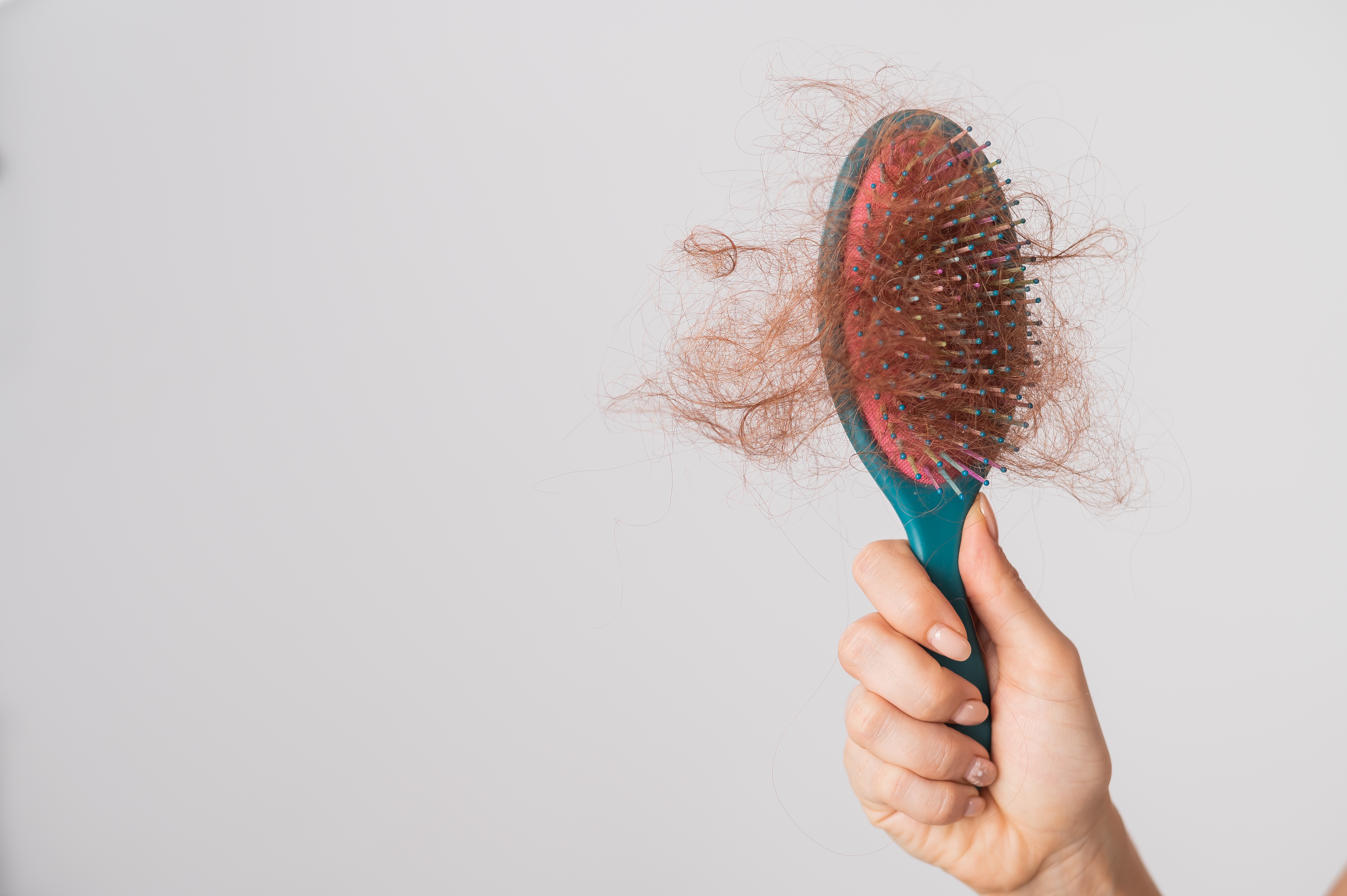
Hair shedding is visual – you see it in the shower, on your pillow, in your brush. Even when it’s expected, it can feel emotionally heavy.
Our doctors understand the emotional impact of shedding. Hair shedding can:
trigger anxiety
make progress feel invisible
undermine confidence
cause people to doubt their decision to start treatment
This is why education matters. Knowing why something is happening makes it easier to persevere through the tough times.
What Comes After Shedding
This is the part our doctors want patients to focus on.
After shedding, many people will begin to notice:
reduced daily hair fall
improved hair texture
thicker hair
baby hairs along the hairline or part
increased hair density over time
These changes don’t happen overnight – but they do happen with a consistent approach to treatment.
How to Support Your Hair During the Shedding Phase
While shedding runs its course naturally, you can support your hair by:
continuing to apply your treatment every day
avoiding harsh styling or tight hairstyles
being gentle when washing and brushing
maintaining good sleep and nutrition
tracking progress monthly rather than daily
Consistency is the single most important factor to achieving visible regrowth.
Final Thoughts
Shedding can feel alarming – but in many cases, it’s part of progress, not failure.
Our doctors want you to remember:
shedding doesn’t mean your treatment isn’t working
it often signals a follicle reset
stopping early can prevent regrowth
patience and consistency are essential
Stay positive – if you’re experiencing shedding, your hair is moving through the natural cycle it needs to eventually grow thicker, fuller and stronger.
References
1.Bi L, Kan H, Wang J, Ding Y, Huang Y, Wang C, Du Y, Lu C, Zhao M, Sun W, Su T, Fan W. Whether the transient hair shedding phase exist after minoxidil treatment and does it predict treatment efficacy? A retrospective study in androgenetic alopecia patients. J Dermatolog Treat. 2025 Dec;36(1):2480739.
2. Nohria A, Desai D, Sikora M, Mandal S, Shapiro J, Lo Sicco K. Combating "dread shed": The impact of overlapping topical and oral minoxidil on temporary hair shedding during oral minoxidil initiation. JAAD Int. 2024 Mar 25;15:220-224.
3. Randolph M, Tosti A. Oral minoxidil treatment for hair loss: A review of efficacy and safety. J Am Acad Dermatol. 2021 Mar;84(3):737-746.
Hair Regrowth Starts Here
Thicker, fuller hair begins with a scientifically proven treatment, personalised for your hair by our experts.
Treatment subject to dermatological assessment.